-
First-then boards and visual schedules: how to use them at home
Two pictures — first this, then that — or the shape of the whole morning. How to make them, how to use them, and how to keep them working.
-
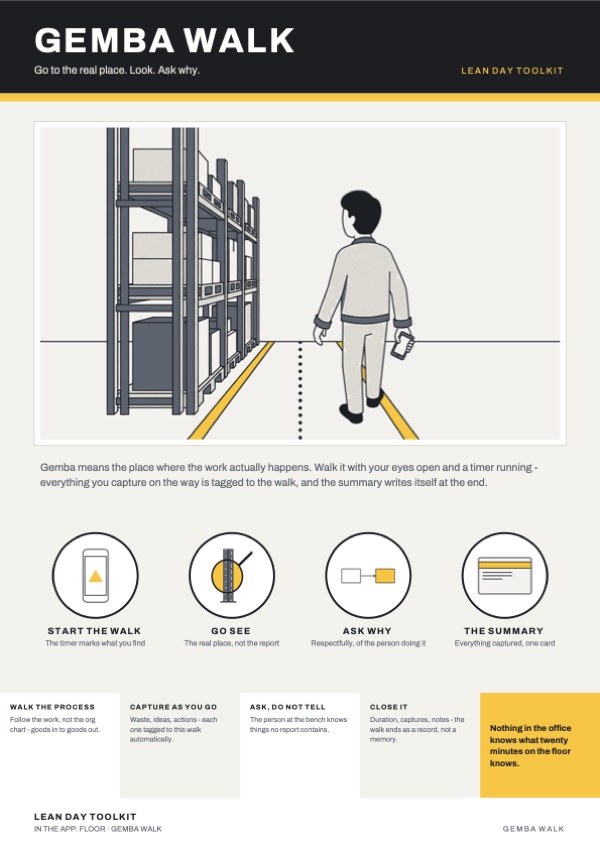
How to do a gemba walk: what to look at and what to ask
Go to the real place, look, and ask why. How to plan a walk, what to look at, the questions that work, and how to close it so it isn't just a stroll.
-
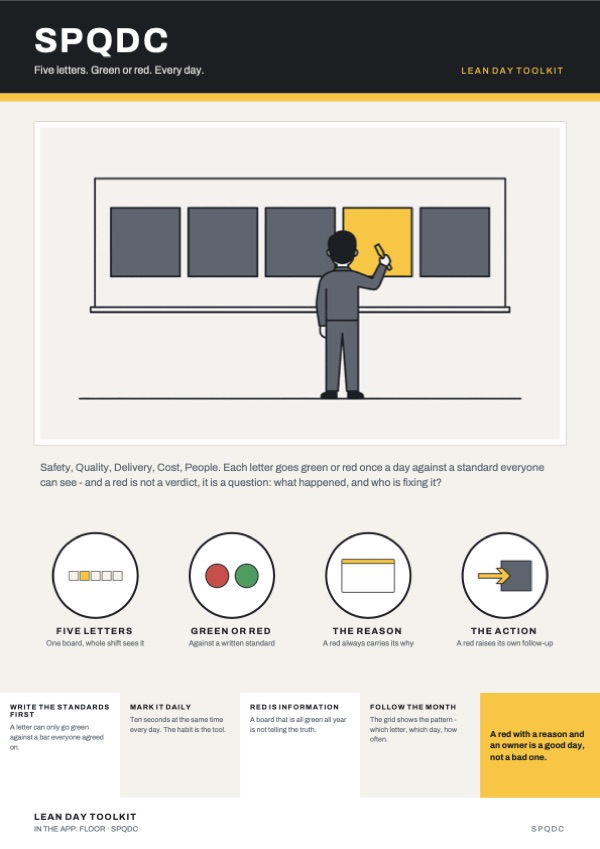
The SPQDC board: what each letter means and how to run it daily
Five letters, green or red, every day. What each one means, how to write the standards first, and why a red is a question, not a verdict.
-
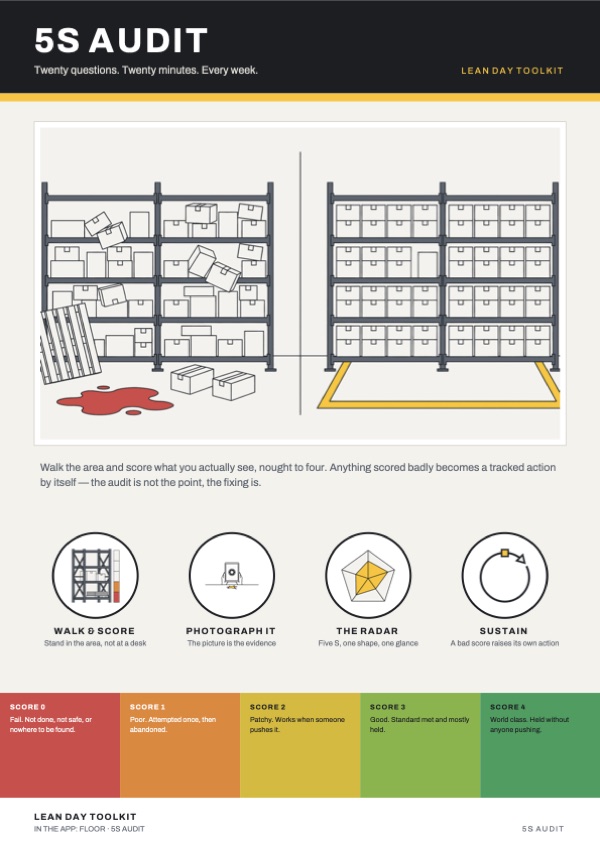
5S audit scoring: what 0 to 4 looks like, with a worked example
What each score from 0 to 4 looks like on the floor, how to add the scores up, and why the audit is not the point — the fixing is.
-
AAC modeling: what it is and how to start at home
Talking and tapping at the same time, so a child sees what the board is for. What ASHA's review says, and five ways to start today.
-
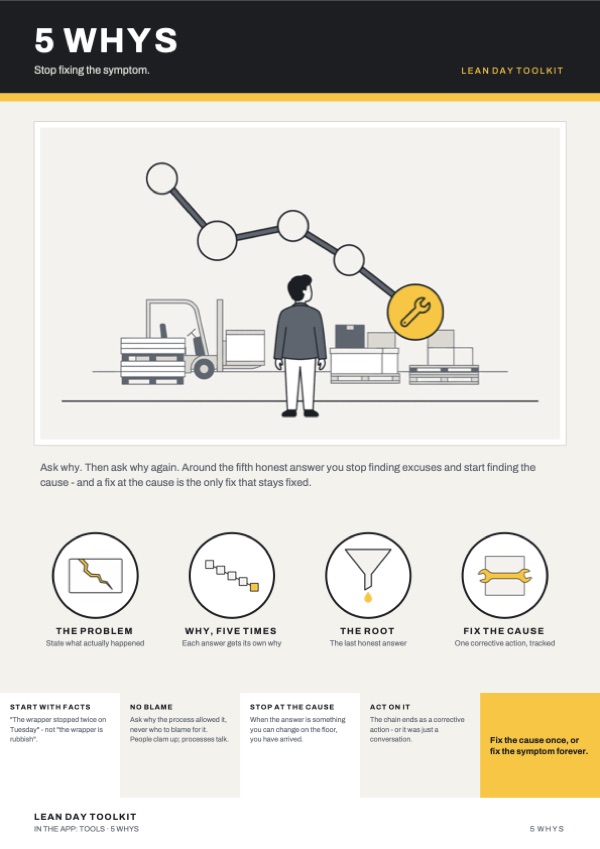
How to run a 5 Whys, with a worked example
Ask why until the answer is something you can change on the floor. A worked example, four rules that keep it honest, and a free poster for the board.
-
Core words: the few words that do most of the talking
A small set of everyday words makes up most of what anyone says. What core words are, why AAC boards are built around them, and how to use them at home.
-
Does AAC stop a child from learning to talk? What the research says
The most common worry about picture boards and talking apps, and what the research summarized by ASHA actually says.
-
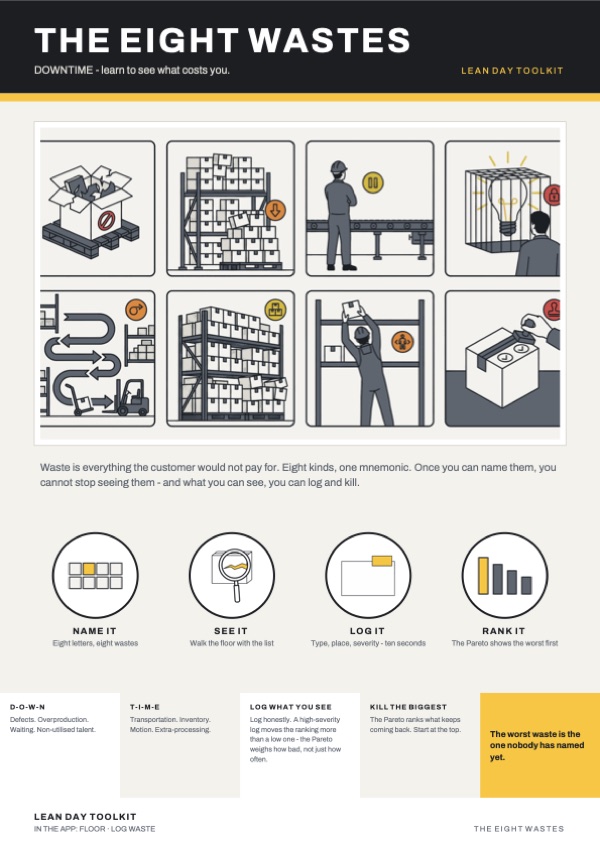
The 8 wastes of lean (DOWNTIME), with examples
Defects, overproduction, waiting, non-utilized talent, transportation, inventory, motion and extra-processing: what each looks like on a real floor.
-
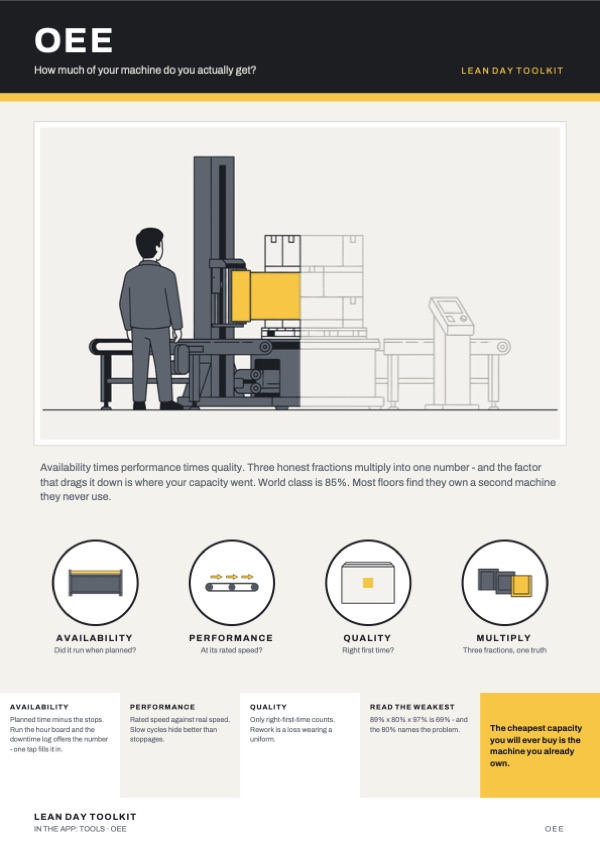
How to calculate OEE, with a worked example
Availability times performance times quality: a worked example for one shift, and how to read the number once you have it.
-
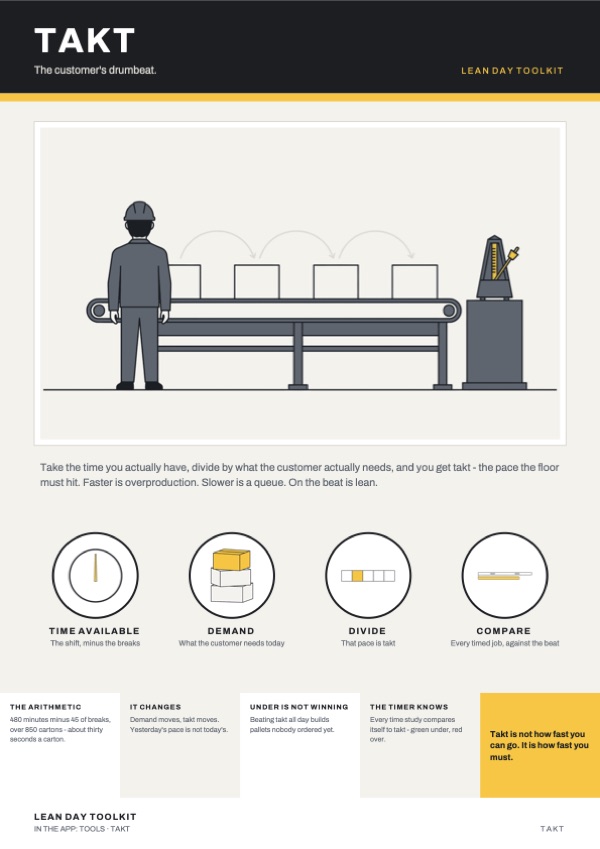
How to calculate takt time, with a worked example
The time you have, divided by what the customer needs. A worked example, the three mistakes that make it wrong, and a free poster for the board.